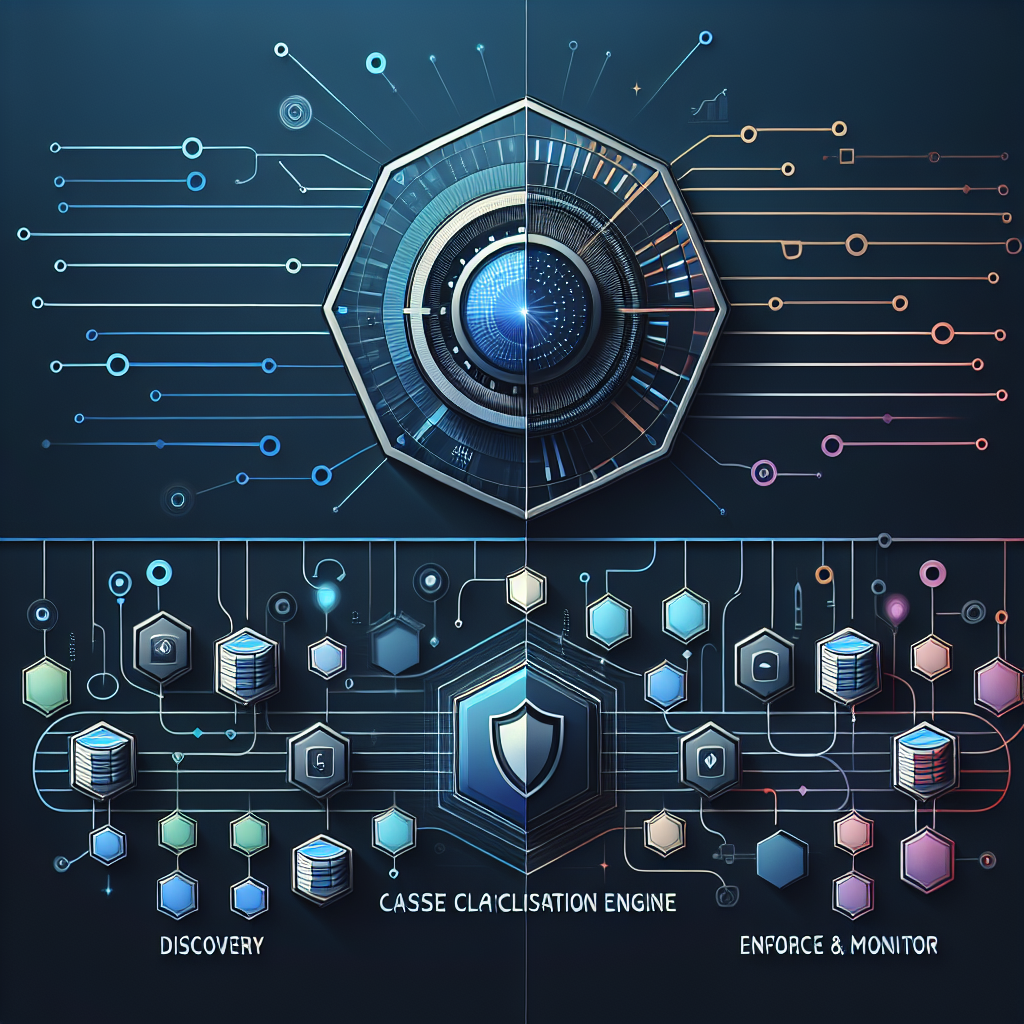
Automating asset classification and labeling is one of the highest-impact tasks you can do to meet the Essential Cybersecurity Controls (ECC – 2 : 2024) Control 2-1-5 requirement: it reduces human error, provides consistent evidence for auditors, and enables targeted controls (patching, encryption, monitoring) based on asset criticality and data sensitivity.
Why automation is required for ECC 2-1-5 and the ECC-2:2024 framework
Control 2-1-5 expects organizations to identify and label assets according to business-criticality and sensitivity, and to maintain that labeling throughout the asset lifecycle. Manual tagging fails when inventories grow, when cloud resources are created frequently, or when endpoint churn is high. Automation enforces taxonomy at provisioning, keeps labels in sync with configuration drift, and generates audit trails (who/when/what), which are explicit ECC-2:2024 evidence artifacts.
Practical implementation workflow (discovery → classify → label → enforce → monitor)
A repeatable workflow reduces risk and is simple to implement: 1) Discover assets (cloud VMs, containers, mobile devices, workstations, IoT) using discovery tools or APIs; 2) Classify using rules that map device attributes, owner, application, and data processed to categories (Public/Internal/Confidential/Restricted); 3) Apply labels (cloud tags, CMDB fields, endpoint attributes) automatically at provisioning and via remediation jobs; 4) Enforce controls based on labels (apply encryption, network segmentation, patch priority); 5) Monitor and reconcile labels daily with automated reports. Implement this through CI/CD/IaC (Terraform, CloudFormation), asset inventory (ServiceNow CMDB, NetBox, Lansweeper), MDM (Intune), and cloud tag enforcement (AWS Config, Azure Policy).
Specific tools and technical patterns you can use
Small businesses can combine low-cost or built-in cloud tools with lightweight orchestration: use cloud-native tagging via AWS -> aws ec2 create-tags --resources i-123 --tags Key=Classification,Value=Confidential or Azure -> az resource tag --tags Classification=Confidential in automation scripts; add server-side enforcement with AWS Config rules or Azure Policy that deny untagged resources or apply remediation. For endpoints, use Microsoft Intune dynamic device groups and compliance policies to assign sensitivity labels; for Linux/macOS/Windows devices you can use osquery + Fleet to collect attributes and trigger labeling workflows via a small SOAR (StackStorm, n8n) or a serverless function (AWS Lambda / Azure Function) that calls your CMDB API. IaC example: resource "aws_instance" { tags = { Classification = var.classification } } ensures new infrastructure is labeled by design. For discovery and reconciliation, use periodic scans with Lansweeper, FusionInventory, or open-source OCS Inventory and write a reconciliation job that updates the CMDB and sends alerts for missing labels.
Small-business scenario and step-by-step example
Imagine a 75-employee e-commerce startup with a mix of AWS-hosted services and 40 employee laptops. Start by defining a simple taxonomy (Public, Internal, Confidential). Deploy AWS Organization-wide tag policies and an AWS Config rule that flags untagged EC2 or S3 and triggers a Lambda to attach default tags or notify the owner. For laptops, use Intune to apply device categories and a compliance script that writes a "Classification" attribute to the asset inventory (ServiceNow Express or even a secured Google Sheet via API). Each new developer VM created via Terraform must include a required variable 'classification'—CI pipeline stops if missing. Track labels in a central CMDB/CSV with automated nightly reconciliation and a weekly report to the CTO for exceptions. This approach costs little, uses built-in cloud enforcement, and gives auditors a clear set of logs and policies to review.
Compliance tips, best practices, and evidence collection
Start simple: pick a small taxonomy, assign owners, and automate tagging at source. Document the classification rules in your ECC-2:2024 artifacts and store them in version control. Keep immutable evidence: tag change logs, CI pipeline logs, AWS CloudTrail records, Config remediation runs, and CMDB change history. Define KPIs such as percent of assets tagged, average time to label new asset, and exception aging. Use policy-as-code (Terraform + Sentinel, Azure Policy as JSON) to make audits deterministic. Also plan for exceptions (e.g., legacy devices) with documented compensating controls and timeboxed remediation plans in the compliance tracker.
Technical risks if you do not implement automated classification and labeling
Failing to automate leads to inconsistent risk prioritization, missed patches on high-value assets, and expanded attack surface because controls (DLP, EDR, encryption) are often driven by labels. Auditors will struggle to produce repeatable evidence, increasing the chance of findings and fines. Operationally, incident response is slower when you cannot immediately identify which assets process sensitive data. Finally, without enforced labeling, cloud cost allocation and legal/data residency requirements become error-prone—exposing you to compliance and financial risk.
Implementation pitfalls and avoidance strategies
Common pitfalls include overcomplicated taxonomies, labeling only in one platform (cloud tags but not endpoints), and relying on manual exceptions. Avoid these by: 1) keeping labels minimal and mapped to specific controls; 2) implementing cross-platform reconciliation (use CMDB as source-of-truth); 3) enforcing labels in IaC and deployment pipelines; and 4) creating automated remediation that quarantines or restricts untagged assets until they are classified. Test your automation with intentional failures and include auditors in initial review cycles so evidence collection aligns with ECC-2:2024 expectations.
In summary, meeting ECC 2-1-5 for asset classification and labeling is achievable for small businesses by adopting a discovery-to-enforcement workflow, leveraging cloud-native policy tools and lightweight orchestration, and maintaining clear classification rules and audit evidence; automating at provisioning, reconciling inventory regularly, and using policy-as-code will minimize risk, streamline audits, and ensure controls are applied consistently across your environment.


