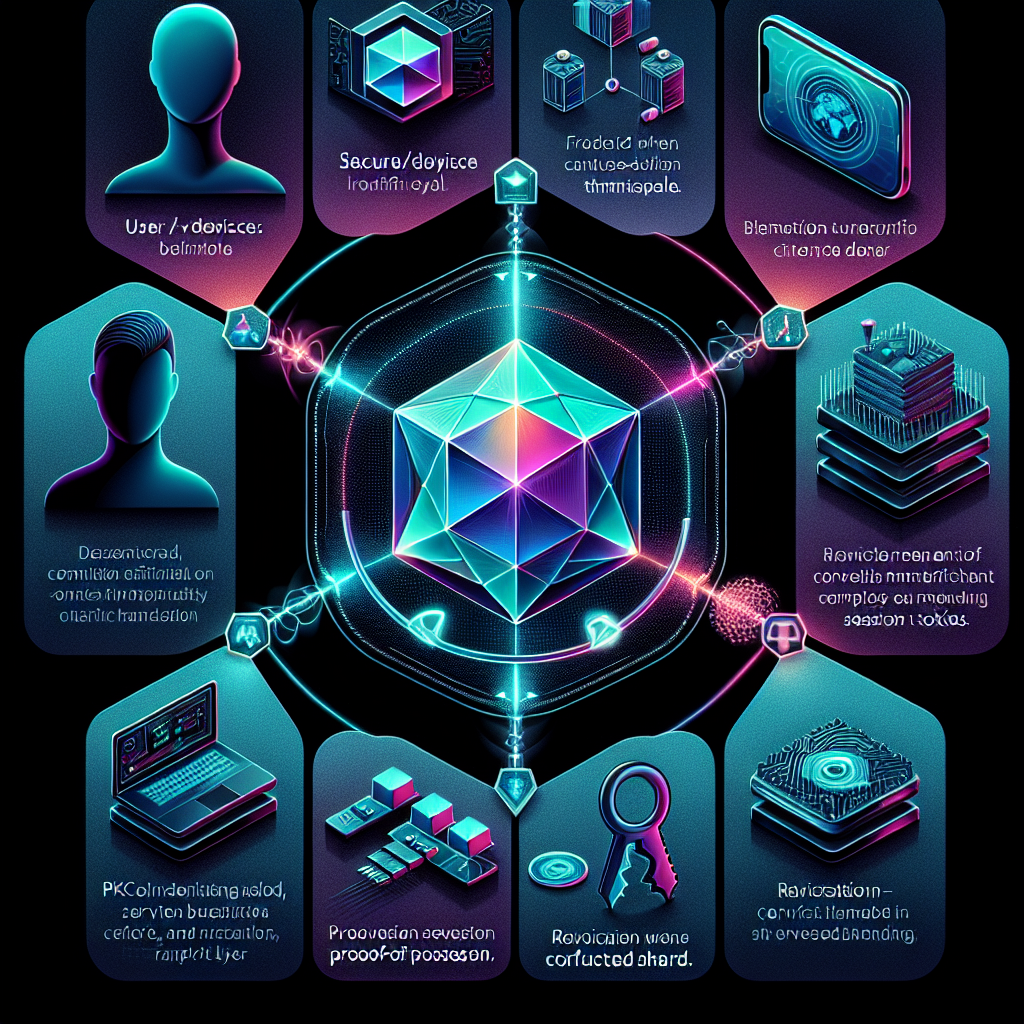
This post explains how to implement secure session tokens and modern OAuth practices to meet NIST SP 800-171 Rev.2 / CMMC 2.0 Level 2 control SC.L2-3.13.15 — protecting the authenticity of communications sessions with concrete, actionable steps, configuration recommendations, and small-business examples you can apply today.
Understanding the control and the risk of non‑compliance
SC.L2-3.13.15 requires that communications sessions are protected so that their authenticity can be validated; in practice this means cryptographic session tokens that are bound to principals and devices, short-lived access tokens, secure storage and transport of secrets, and operational controls (revocation, logging, and monitoring). Failing to implement these protections increases risk of session hijacking, credential replay, privilege escalation and data exfiltration — all of which can lead to loss of controlled unclassified information (CUI), audit failure, and contractual penalties.
Designing secure session tokens and OAuth flows
Adopt OAuth 2.0 Authorization Code flow with PKCE for user-facing clients (including single‑page apps), and use client_credentials or mTLS for machine-to-machine authentication. Configure access tokens as short-lived (recommended: 5–15 minutes) and refresh tokens with constrained lifetime and rotation (recommended: refresh token sliding window of hours to days with rotation and reuse detection). Sign tokens using asymmetric algorithms (RS256 or ES256) with keys stored in a KMS/HSM; avoid symmetric signing (HS256) for systems where multiple services validate tokens. Include robust JWT claims: iss (issuer), aud (audience), sub, exp, nbf, iat, jti (unique token id), and scopes that enforce least privilege.
Implementation details — what to set and why
Concrete settings: TLS 1.2+ (prefer 1.3) for all endpoints; RSA keys >= 2048 bits or EC P-256 for signing; access_token exp = 300–900 seconds; refresh_token lifetime = 24 hours (or tuned to business risk) with refresh token rotation enabled and reuse detection that triggers revocation and forced re-login. Use token introspection/revocation endpoints per RFC 7662/7009 and log all calls to those endpoints. For session IDs (server-side sessions), use cryptographically random 128+ bit identifiers, store server-side session state (e.g., Redis) and set cookie flags secure, HttpOnly, and SameSite=strict or lax depending on cross-site needs.
Small business scenarios and real-world examples
Example 1 — SaaS with React SPA + Node API: use an external identity provider (Auth0/Okta/Keycloak) configured for Authorization Code + PKCE; set access_token lifetime to 15 minutes, enable rotating refresh tokens and store the refresh token in an httpOnly, Secure, SameSite cookie accessible only to your backend. The SPA never stores tokens in localStorage; the backend exchanges cookies for access tokens to call APIs. Example 2 — Small internal app with legacy clients: if you must use server-side sessions, store session state in Redis with an inactivity timeout (e.g., 30 minutes), sign cookies with a server secret (rotate secrets), and require re-authentication for high‑risk operations. Example 3 — Machine-to-machine: use OAuth client_credentials with mTLS or JWT assertion, require client credential rotation every 90 days, and register allowed scope sets for each client to restrict access.
Token lifecycle, revocation, introspection, and monitoring
Operationalize token lifecycle: issue tokens with jti so you can detect replays, keep a revocation list or use introspection for opaque tokens, and implement token revocation on logout, credential compromise, or admin action. Integrate token logs into your SIEM/EDR: log issuance, refresh, revocation, failed validation (signature, exp, aud mismatch), and introspection queries. Monitor behavioral anomalies (geographic IP changes, impossible travel, concurrent sessions) and implement automated revocation or step-up authentication. Retain evidence (configuration screenshots, parameter settings, rotation logs, and incident records) to demonstrate compliance during an audit.
Best practices, controls, and developer guidance
Enforce least privilege via scopes and resource-based authorization checks; validate tokens at every service boundary (signature, issuer, audience, expiry) and cache validation results only very briefly. Use secure secret storage (cloud KMS, HashiCorp Vault) and enforce key rotation (automated yearly or on compromise). For mobile/native apps use OS keystore (iOS Keychain, Android Keystore) rather than file storage. Implement CSRF protection when cookies are used for session tokens and harden applications against XSS to prevent token theft. For inter-service auth, prefer mTLS or OAuth 2.0 mutual TLS and consider token binding where supported.
Not implementing these controls leaves sessions vulnerable to theft, replay and impersonation; consequences include unauthorized data access, lateral movement, and regulatory non-compliance. Attackers often exploit long-lived tokens and tokens stored insecurely (localStorage or plain cookies without flags), so reduce exposure by minimizing lifetimes and centralizing token validation and revocation.
Summary: to satisfy NIST SP 800-171 / CMMC SC.L2-3.13.15, implement Authorization Code + PKCE, short-lived access tokens, rotating refresh tokens, asymmetric signing with KMS/HSM-backed keys, revocation and introspection endpoints, secure storage and transport of tokens, and comprehensive logging and monitoring. Start with small, measurable defaults (e.g., 15‑minute access tokens, rotating refresh tokens, PKCE for SPAs), document configurations and rotation policies, and test revocation and anomaly detection workflows to demonstrate compliance and reduce real-world risk.


